You Asked. She Answered.Click the questions below to see Natalie's responses
Question: Natalie how much do you practice?
Natalie: The number of hours that I spend training changes depending on the day of week, time of season and phase in training. I lift weights, do Pilates, run and do other cardio in addition to my swimming. Those hours definitely add up! I like to tell people whether you like it or not, you’re training 24/7. The choices that you make throughout the day (rest, nutrition, training, etc.) affect your training; therefore you’re training all day long!
Question: Natalie-you inspire me! Swim it girl! I regularly do triathlons and love to swim, but have a hard time with my kick. I know my legs are strong yet my kick always lags. It seems I barely kick at all and it is a three beat kick. When I work with the kickboard it seems ok I just can't seem to incorporate it when I actually swim. I'm a lifeguard too and need those legs! Any tips?
Natalie: I bet your problem probably lies in your flexibility. If your ankles are inflexible, they are not going to hold any water no matter how hard you kick. There are plenty of stretches to you can do to work on your ankle flexibility. It will take time and patience, but improving your ankle flexibility will greatly help your kick.
Question: Natalie - you are amazing - thank you for taking my question. Can you outline for us body position tips for freestyle (head position, flat shoulders vs. swimming on side, etc.) thanks!
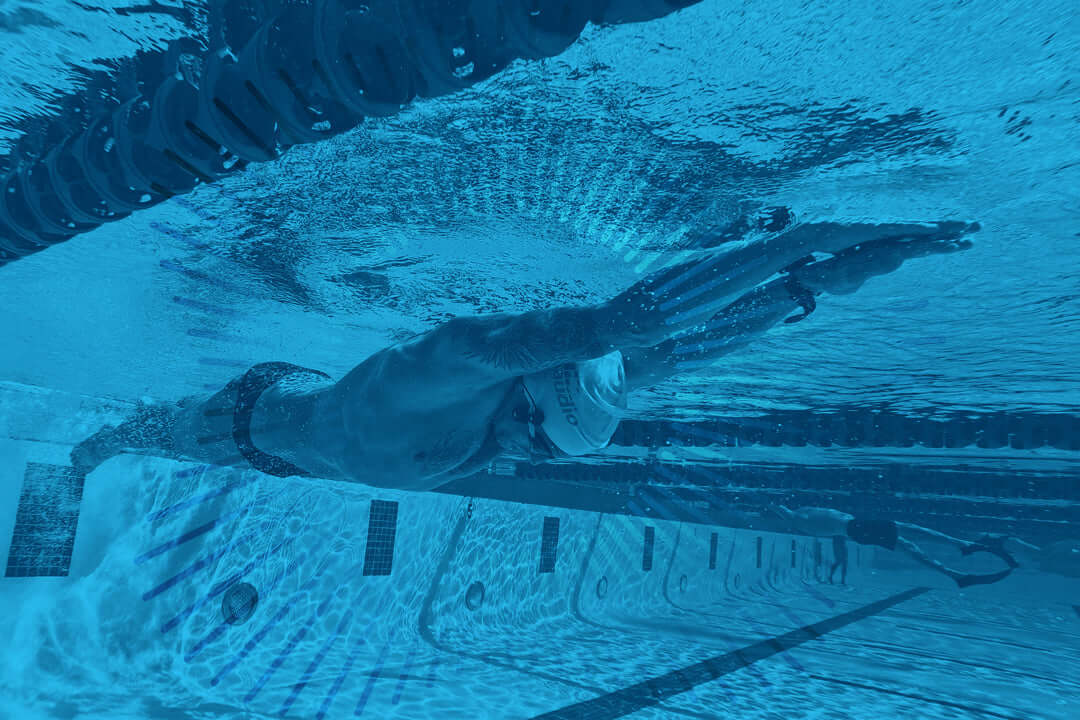
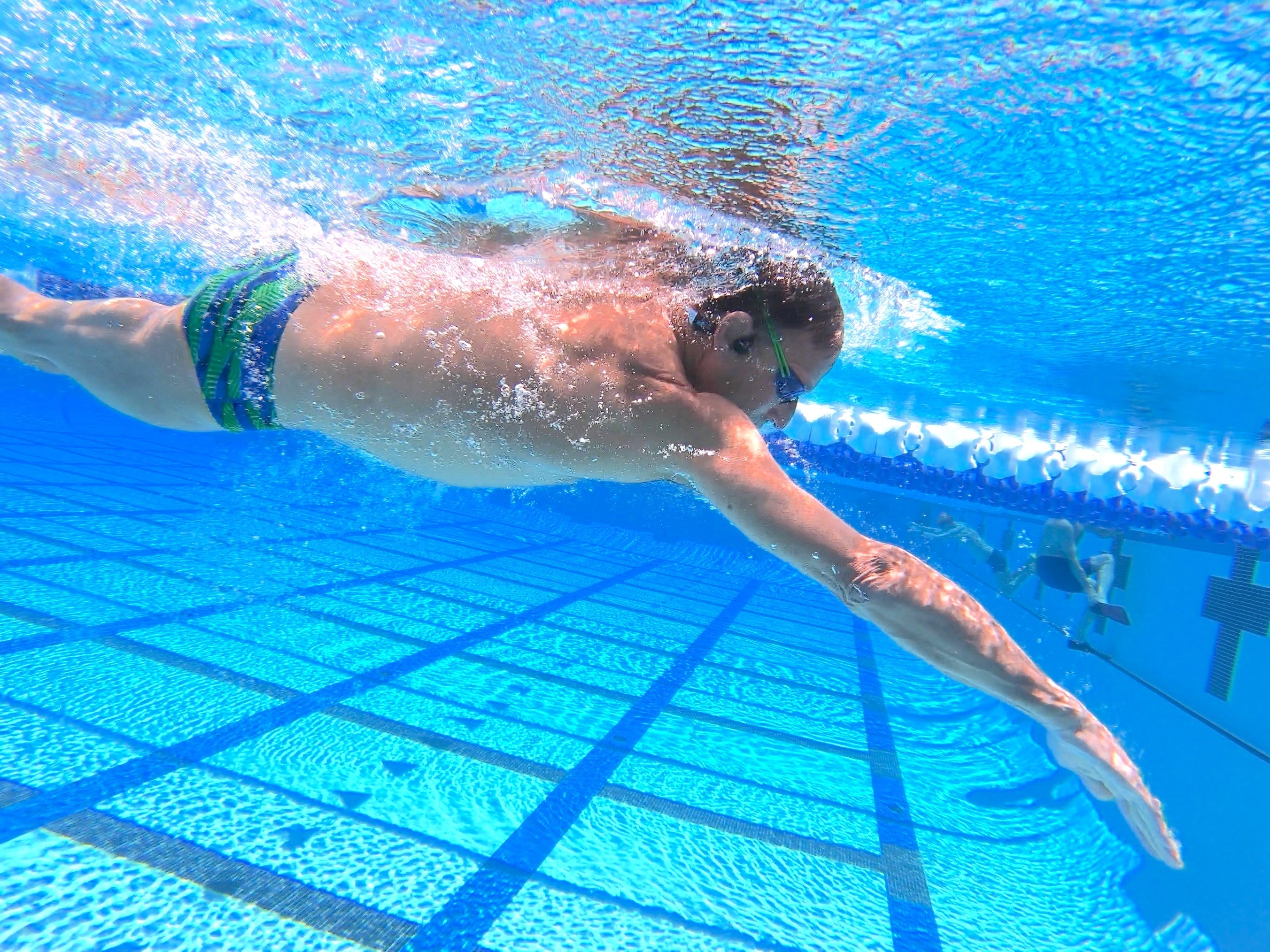
Natalie: Freestyle body position is simple... imagine you have the perfect posture on land and that's your position in the water (except you are prone). You want your head in line with your body, looking at the bottom of the pool. One of the biggest and most common mistakes that I see people make is looking forward while they swim. Look at the bottom of the pool and use the black lines to see where you are in the pool. When you swim freestyle you should rotate your entire body from side to side, from the neck down. The only time your face is not facing the bottom is when you rotate to breathe.
Question: Natalie - can you comment on breathing techniques in freestyle, every other stroke/alternating sides... every stroke?
Natalie: I think it's important to alternate breathe as much as possible. I breathe either every 3 or every 5. This helps balance out your stroke and helps prevent muscle imbalances. When it comes to race time, do whatever is most comfortable.
Question: Do you exhale will underwater and if so do you through your mouth or nose?
Natalie: When I am doing my underwater kicks, I am not exhaling at all. I plug my nose with my upper lip so that the air doesn't escape.
Question: Should I rotate slightly to non-breathing side, or do I stay flat in the water?
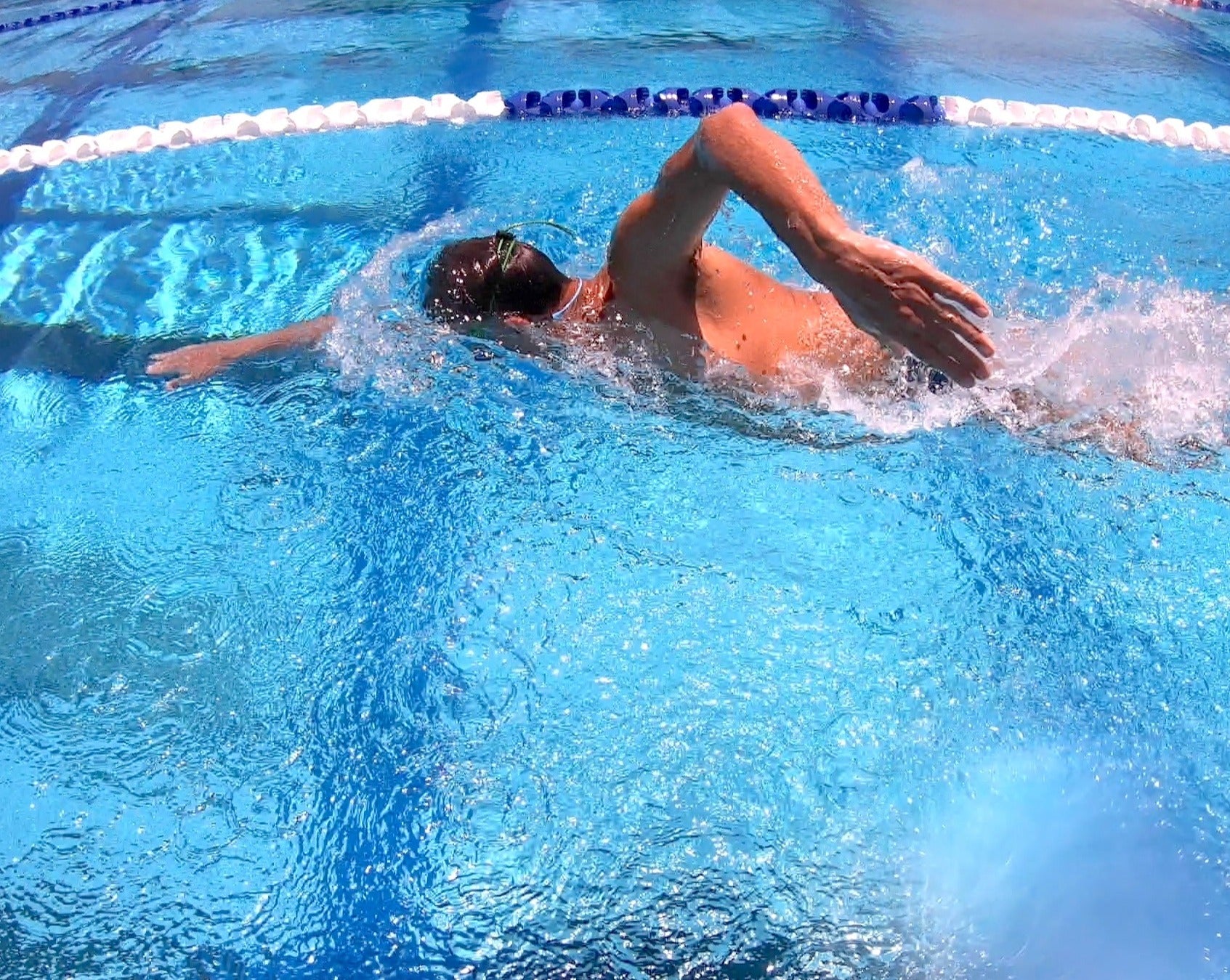
Natalie: Rotation is the key to using your core strength in swimming. You need to think of anchoring with your arms and rotating your body around that anchor point. That way you are engaging your core in addition to your arm strength when pulling, which will lead to better efficiency.
Question: It looks like you extend your arm in front of you, almost gliding a bit before the start of the next stroke. Is that something I should be doing? I'm training for my 1st half-Ironman in April.
Natalie: Not necessarily. Rotate into your catch, always maintaining hold on the water. If you feel like you are gliding you are probably losing speed and momentum. Focus on having an even, steady tempo that you can maintain for the distance of your triathlon.
Question: Do you use a sweeping motion on your pull? On your exhale do you use just your nose or nose and mouth?
Natalie: Try not to think of specific arm movement patterns while swimming. I've always found those to be confusing. Try to make the water feel as "thick" as possible, which means that you're holding water. If the water feels "thin," you're probably slipping. Exhale with both your nose and mouth while being as relaxed (not forceful!) as possible.
Question: How do I rotate my upper body and not my hips for the freestyle stroke?
Natalie: You want to rotate your upper body and your hips. When you're doing freestyle, everything rotates as a unit from the neck down. Also, remember that your body position in the water is much like good posture on land: Your head should be facing the bottom of the pool.
Question: I am struggling with the notion of unilateral vs. bilateral breathing. Why would I want to opt for bilateral breathing? Is it more efficient, and does it improve overall speed?
Natalie: Bilateral breathing is not necessarily more efficient or faster, but I think it is an important goal. When I train I always breathe every 3 or every 5. Bilateral breathing helps you to balance out your stroke and avoid muscle/strength imbalances that could lead to injury. Aim to breathe every 3 or 5 in practice, and do whatever is most comfortable in your races.